Play / Space
Deadline
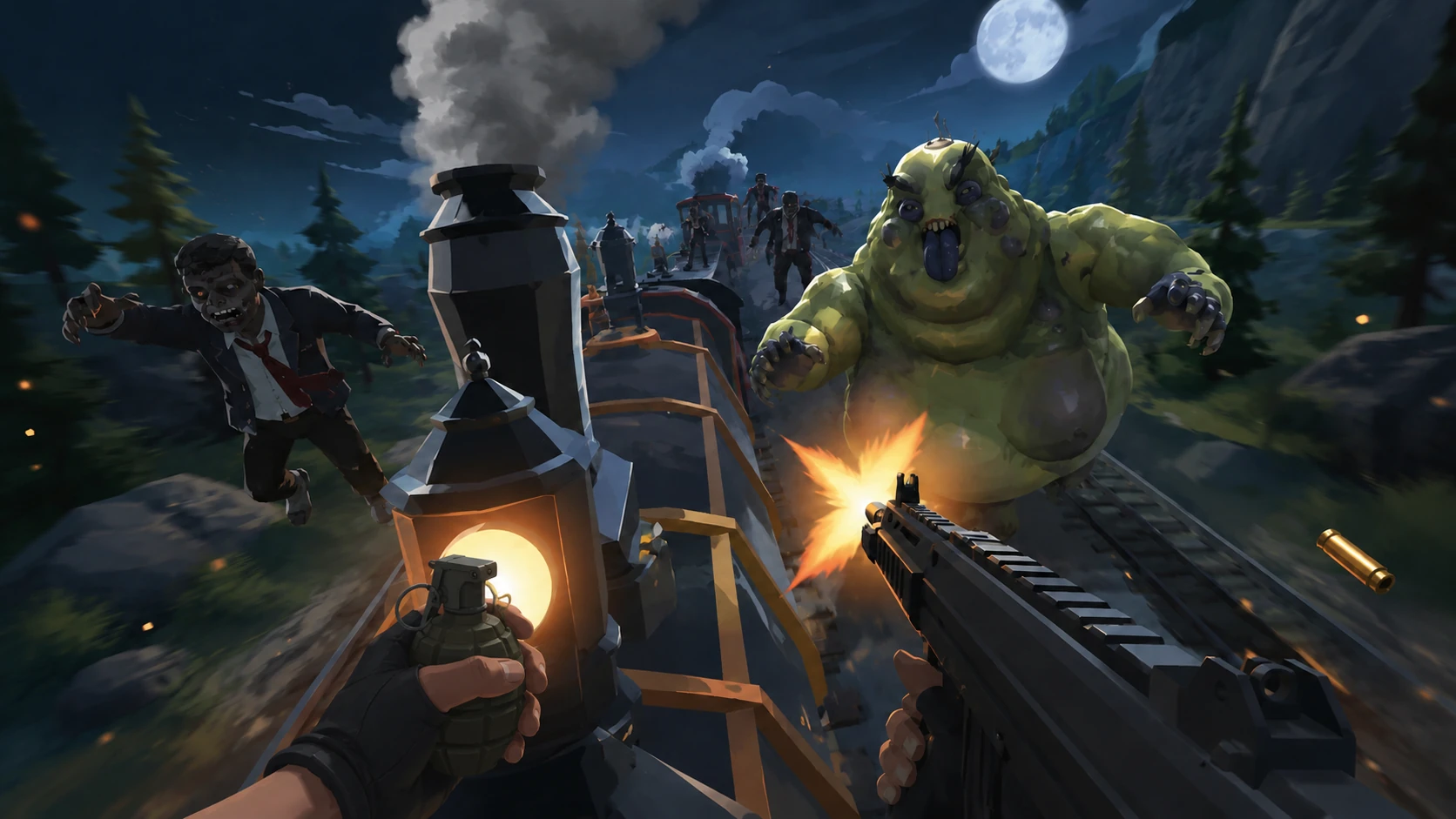
A VR survival shooter that focuses combat ahead of the player while a moving train carries them through the environment.
Watch gameplay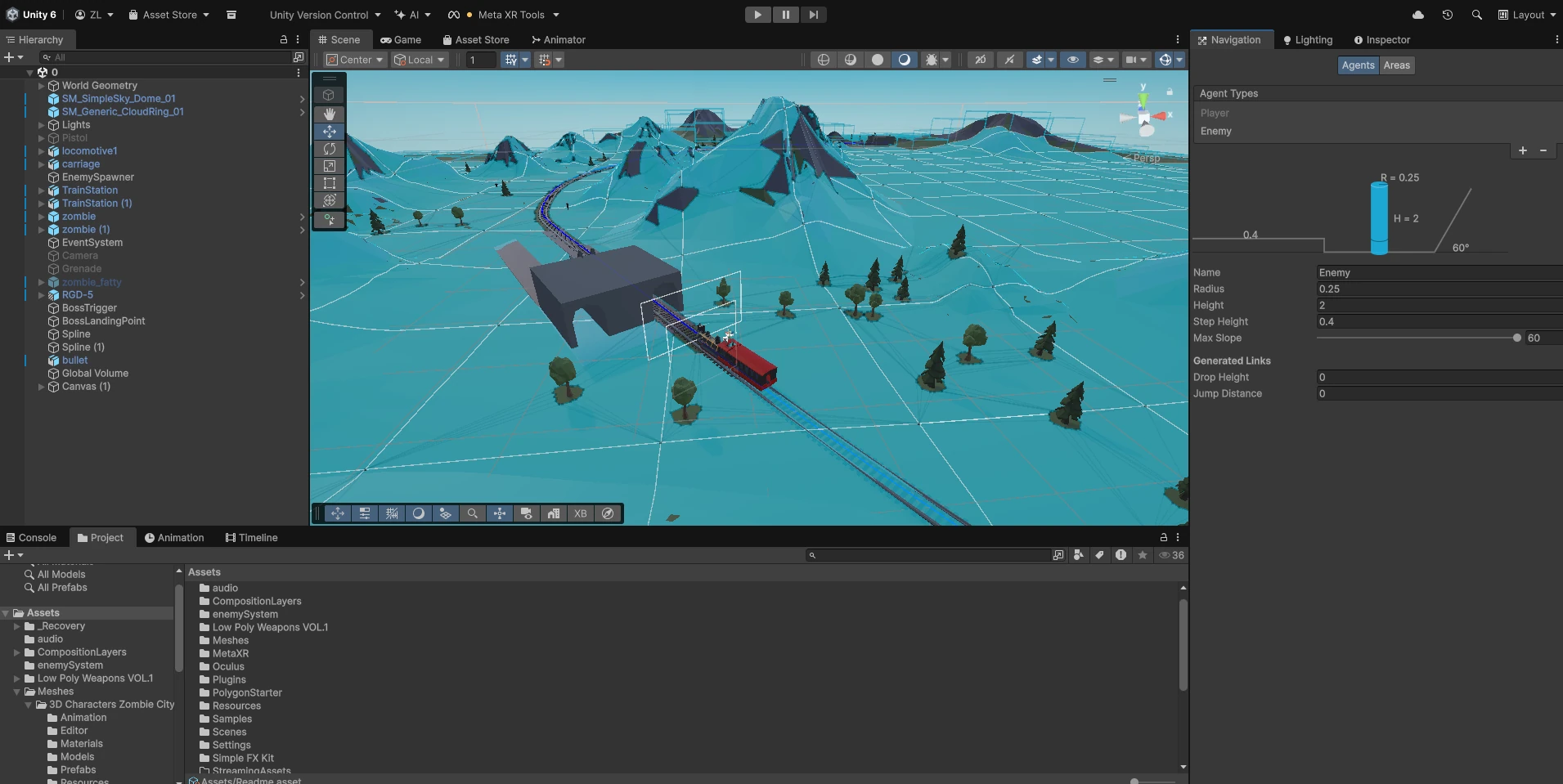
Physical presence Virtual motion
Overview
Deadline is a VR survival shooter for Meta Quest 3 in which players defend a moving train against waves of zombies. Rather than combining free locomotion with threats from every direction, the game concentrates enemy encounters ahead of the train and lets the vehicle handle travel through the environment.
I built the 3D environment, assembled and adapted assets, and developed VR gameplay in Unity and C#, including weapon handling, shooting, and enemy behavior. My design focus was to reduce the number of tasks players needed to manage simultaneously: locating threats, aiming, and responding to combat would take priority over navigating and constantly checking behind them.
Recorded gameplay showing the train environment and VR combat loop.
The challenge
How can a moving-train VR shooter preserve urgency without requiring constant turning or simultaneous navigation and weapon control?
- 01
Focus attention without removing combat pressure. Players should be able to locate approaching threats without repeatedly searching the entire surrounding environment.
- 02
Separate travel from combat controls. The experience should retain a sense of movement without asking players to manage locomotion while aiming and shooting.
Key design decisions
Focus combat within a forward-facing zone
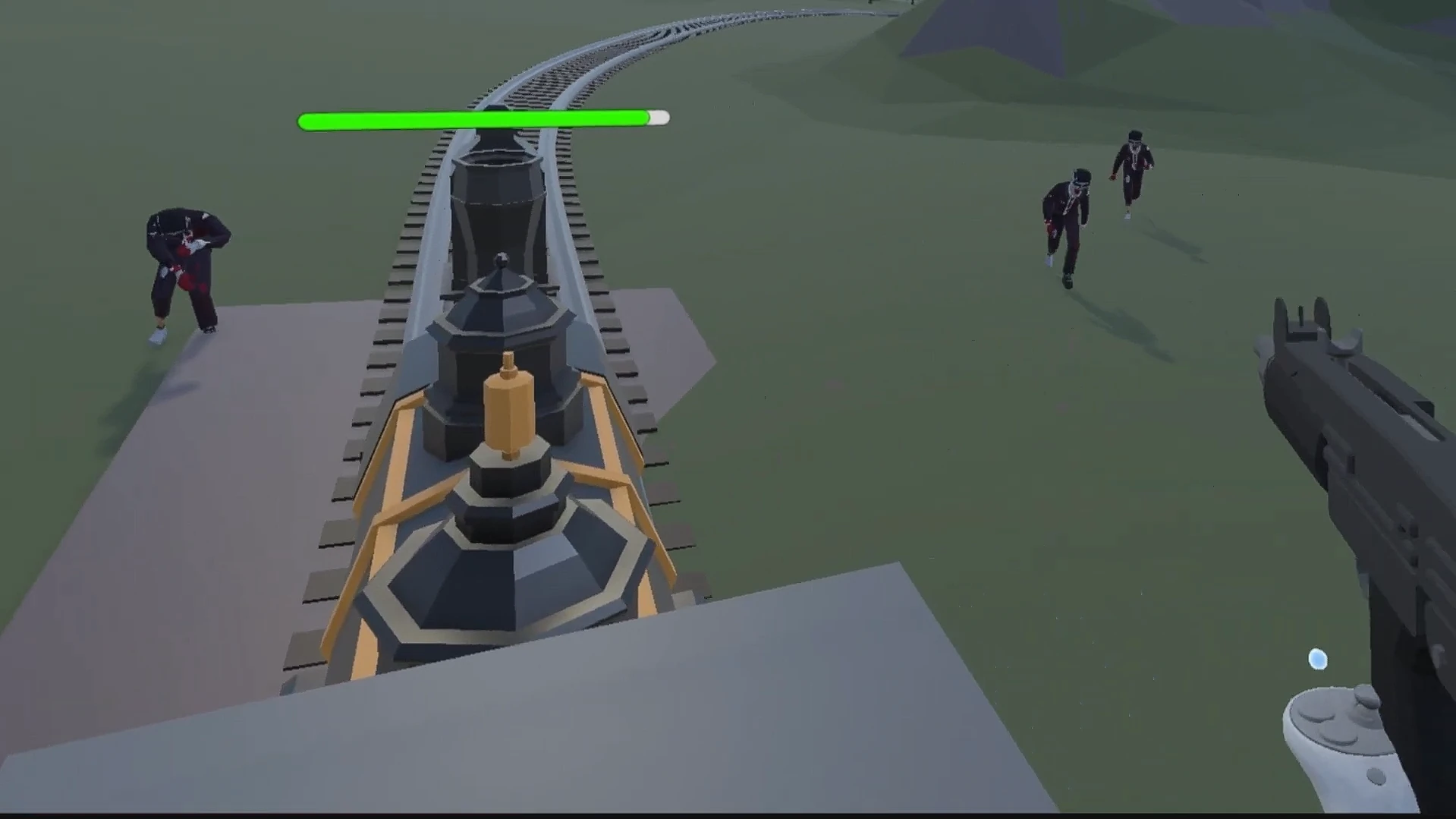
I arranged enemy encounters within an approximately 60-degree zone ahead of the train rather than distributing threats around the player. This makes the expected direction of attack explicit and removes the need to repeatedly turn around to check for enemies behind them.
The intention was to reduce large-angle scanning and keep attention on identifying, prioritizing, and aiming at approaching targets. This is a decision about enemy placement, not a restriction on where the player can look.
The trade-off is a less surrounding, unpredictable battlefield in exchange for a more focused combat space. The challenge comes from responding to threats ahead rather than continuously searching for where the next attack might originate.
Let the train handle travel
The train carries the player through the level instead of requiring them to navigate while shooting. This separates traversal from weapon handling: the game manages the journey, while the player manages the combat.
The carriage also provides a consistent local reference against the moving landscape. It gives the experience a defined place to stand and fight, rather than making the player responsible for navigating an open environment.
I traded freedom of movement for a simpler division of responsibilities. The goal was to preserve the experience of travelling through a dangerous world without adding continuous locomotion input to the shooting interaction.
Playtest observations
- The first steps were not clear enough.
Some players were unsure what to do when the experience began. This suggested that the tutorial and instructions did not communicate the initial objective and first actions clearly enough. - The focused FPS experience appealed to some players.
Some players enjoyed the straightforward shooting experience and its simple, direct controls. The focused combat interaction was a positive part of their experience.
Summarized from informal player feedback; not verbatim quotations.
Design response
The feedback points toward a clearer introduction rather than a more complex control scheme. My next priority would be to help players enter the combat experience while preserving the direct interaction that some players enjoyed.
I would make the opening objective explicit and introduce essential weapon actions through short, contextual prompts. A brief, low-pressure opening encounter could give players space to understand and practice the interaction before the main combat begins.
Follow-up playtests would check whether first-time players can understand the objective and begin playing without additional verbal guidance, while still finding the controls straightforward.
Outcome
A playable VR survival-shooter prototype for Meta Quest 3, combining a moving-train environment with weapon interaction and wave-based combat.
In VR, intensity cannot be separated from comfort. Movement, level composition, feedback, interaction timing, and performance all have to support the player’s ability to remain oriented.
Playable Meta Quest 3 VR prototype