Space / System
SurveillancePleasure
The official virtual version of Surveillance Pleasure, bringing its artworks and exhibition atmosphere to audiences unable to visit in person.
Explore the exhibition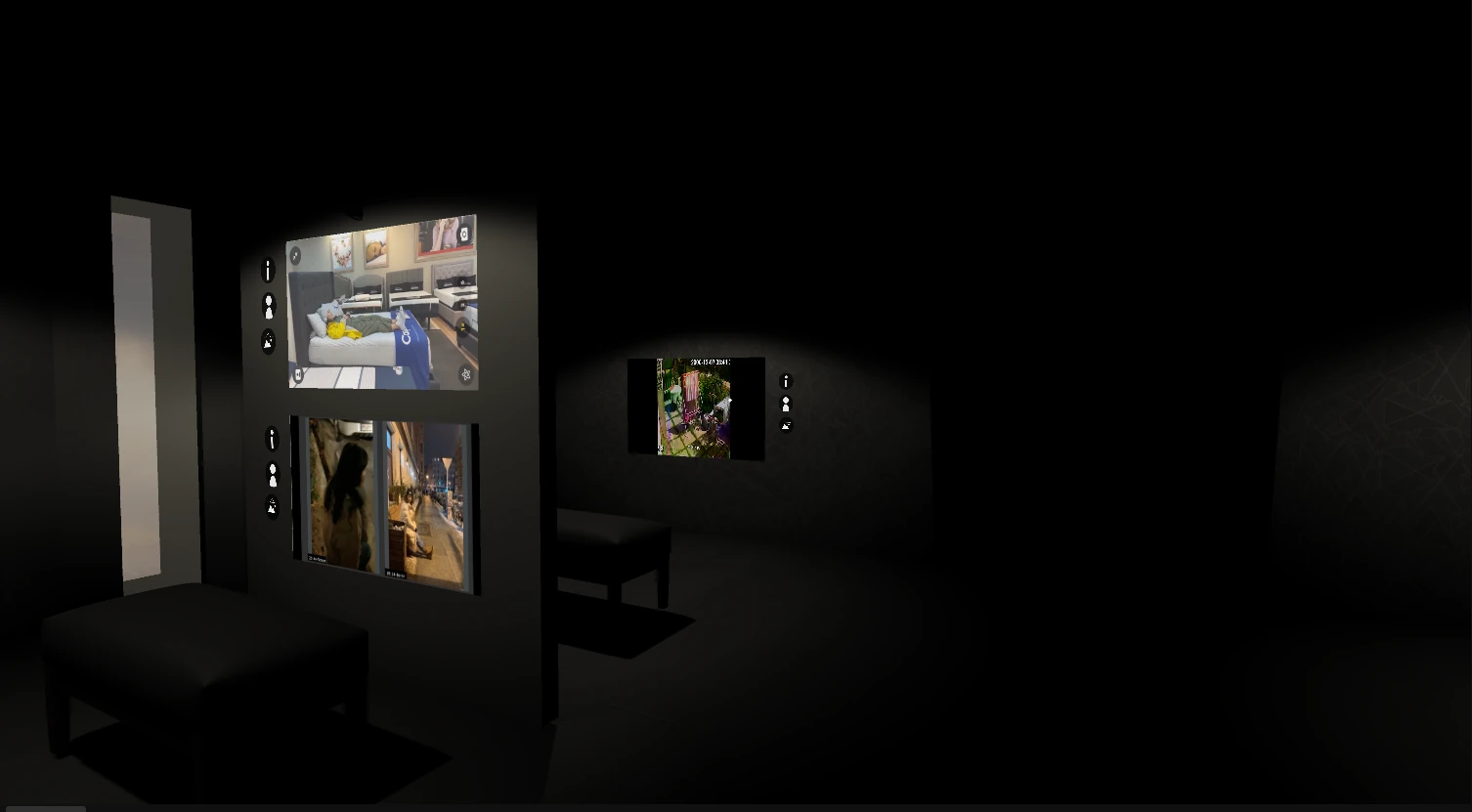
Curatorial intent Spatial exploration
Overview
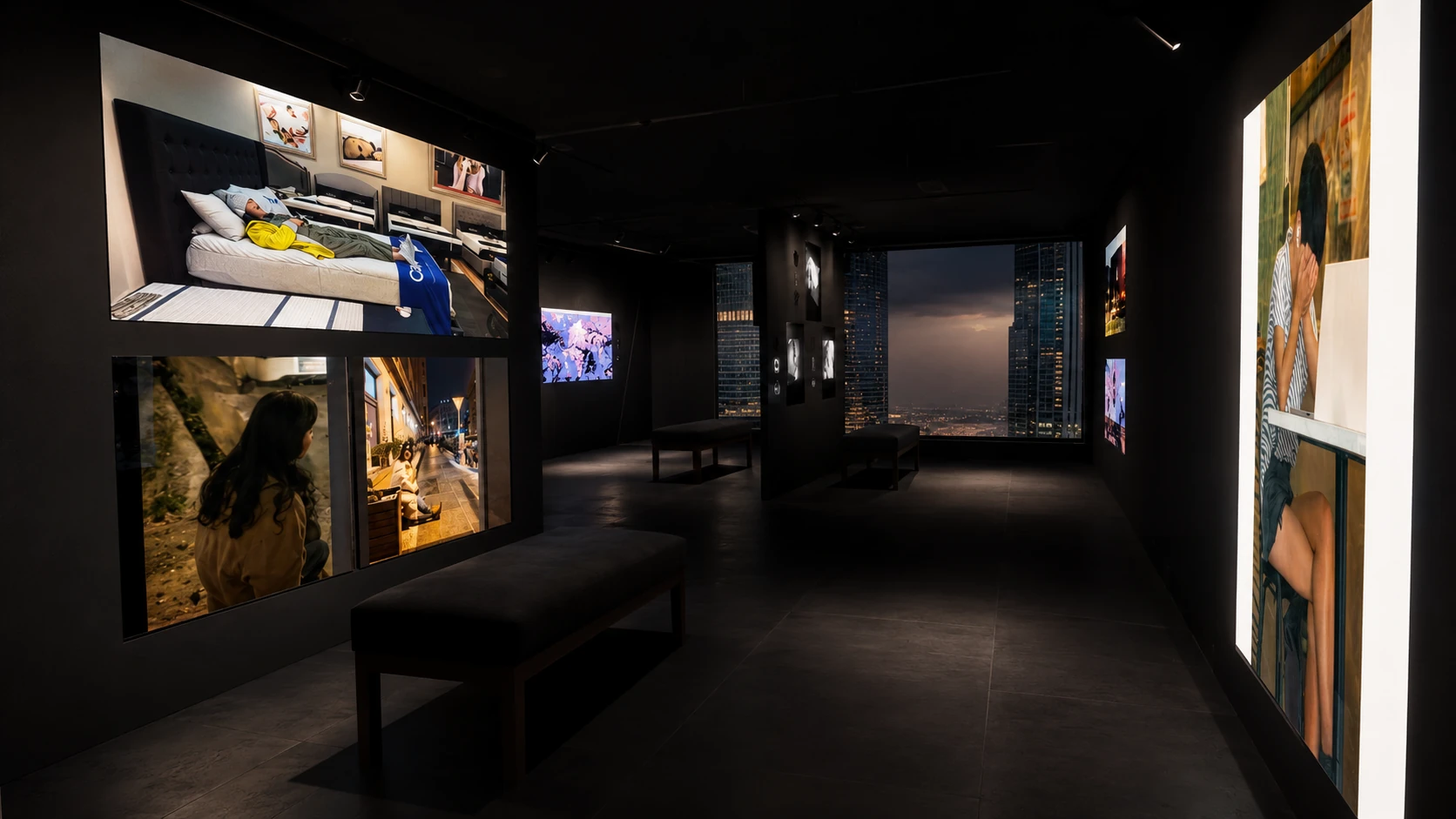
This project is the official virtual version of the physical exhibition Surveillance Pleasure, developed in Unity for browser-based exploration. It offers audiences unable to attend in person a way to encounter the exhibition’s atmosphere, explore its artworks, and learn about individual pieces within a navigable digital gallery.
I designed and built the 3D environment and its interactive presentation. Lighting, scale, room relationships, and contextual information support the exhibition’s atmosphere while keeping the artworks central. The focus was on extending the exhibition experience beyond the physical venue, rather than presenting its works as an isolated collection of images.
Explore the gallery below, or open the full experience for more room to navigate.
Open full experienceThe challenge
How can a physical exhibition retain its atmosphere and curatorial logic in virtual space?
- 01
The gallery must preserve atmosphere without competing with the artworks.
- 02
Spatial connections must support self-directed exploration and a coherent exhibition sequence.
- 03
Artwork information must remain accessible at the point of discovery.
Key design decisions
Keep the architecture visually restrained
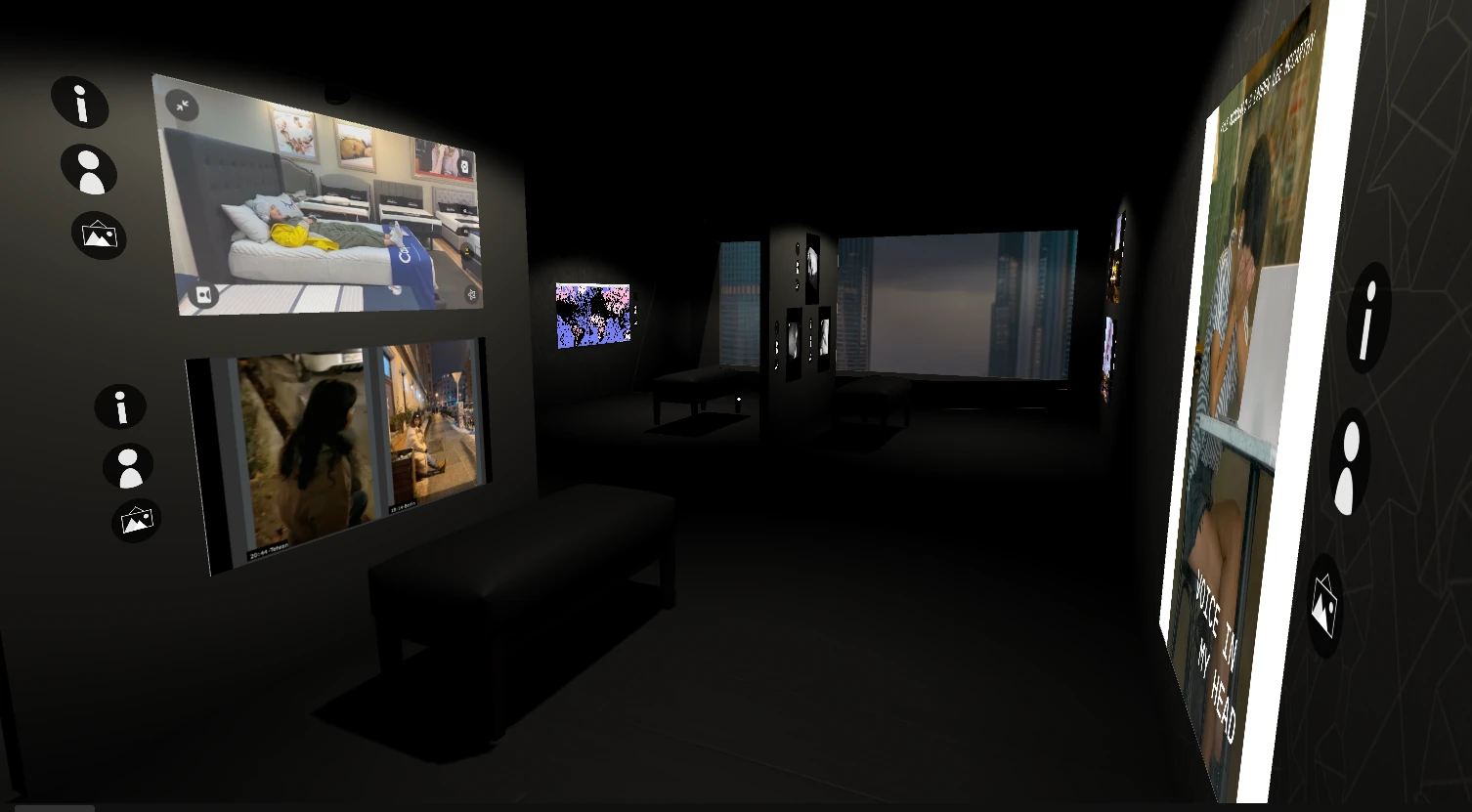
The environment uses a minimal spatial language so the gallery supports the work instead of competing with it. Dark surfaces, controlled contrast, and repeated architectural elements create a coherent atmosphere while keeping the artworks visually central.
Use space to preserve curatorial rhythm
Artwork placement, room transitions, and viewing distance translate the exhibition into a sequence visitors can discover at their own pace. Spatial relationships carry the curatorial logic rather than relying on a fixed linear presentation.
Attach interpretation to exploration
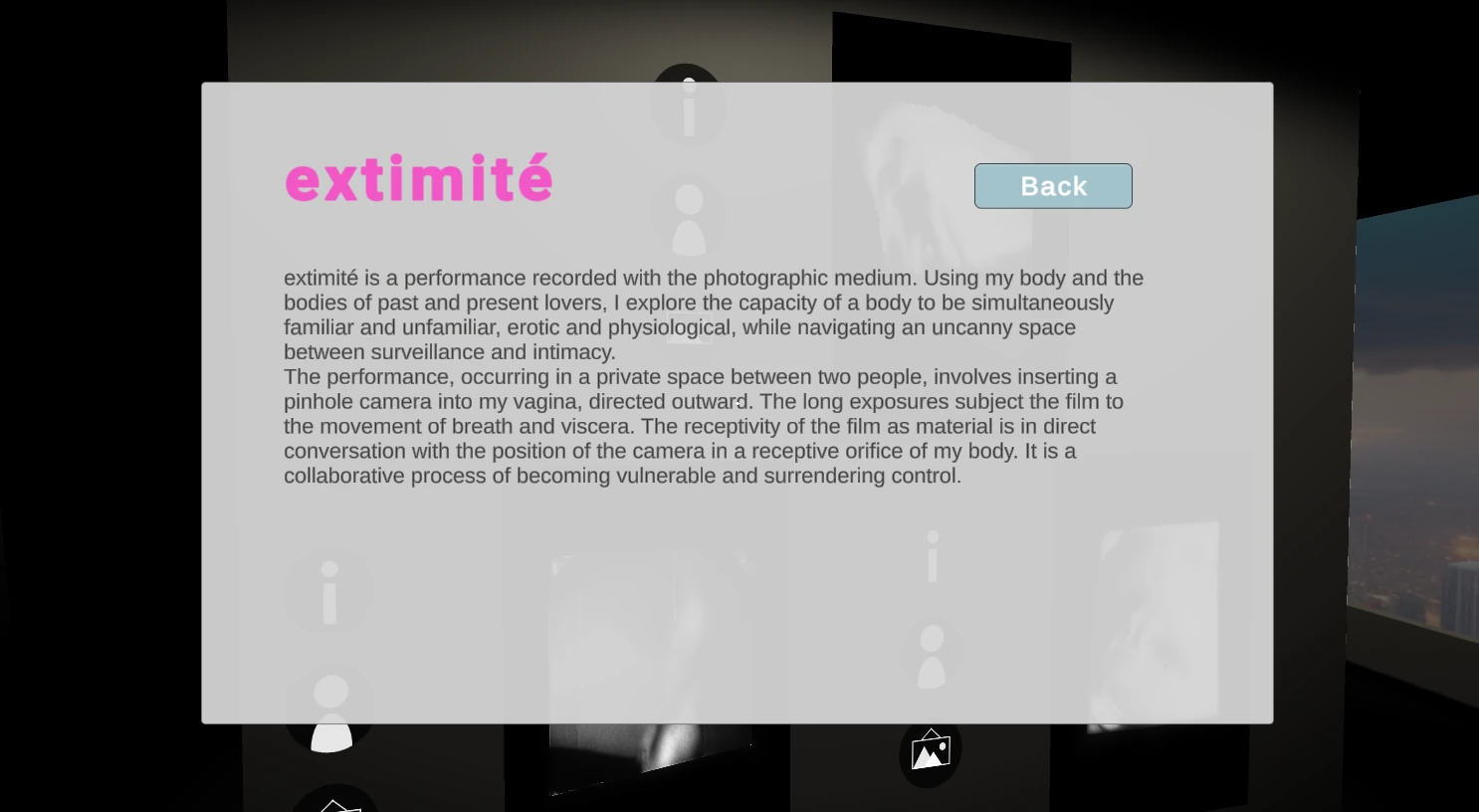
Additional information is available at the point where visitors encounter an artwork. This keeps interpretation connected to spatial discovery while allowing visitors to choose how deeply they engage with each piece.
Current evidence
The published gallery serves as the exhibition’s official virtual version. Visitors can move through the space at their own pace and access information about artworks where they encounter them.
This combines two aspects of remote viewing: exploring the exhibition as a connected environment and learning about individual works. Audiences do not need to attend the physical venue to access either part of the experience.
Next iteration
The next iteration would focus on first-time remote visitors, particularly people who have not seen the physical exhibition. I would observe whether they can understand the navigation, move between rooms, and discover artwork information without additional guidance.
I would also ask what they took away from a selected artwork and how they perceived the gallery’s atmosphere. These observations would guide refinements to introductory guidance, spatial connections, and information-panel readability while keeping attention on the exhibition itself.
Outcome
A published, official virtual version of Surveillance Pleasure, offering audiences unable to attend in person an alternative way to explore the exhibition and learn about its artworks.
My main takeaway was that extending an exhibition online requires more than reproducing its appearance. Spatial relationships and atmosphere give the works a setting, while interaction and contextual information help visitors explore and interpret them independently.
Published official virtual exhibition, built in Unity and available in the browser.