Play / System
TwogetherClimb
Two players control opposite sides of one body, turning a climb through oversized kitchen objects into a shared challenge of coordination and communication.
Watch gameplay
Two intentions one shared body
Overview
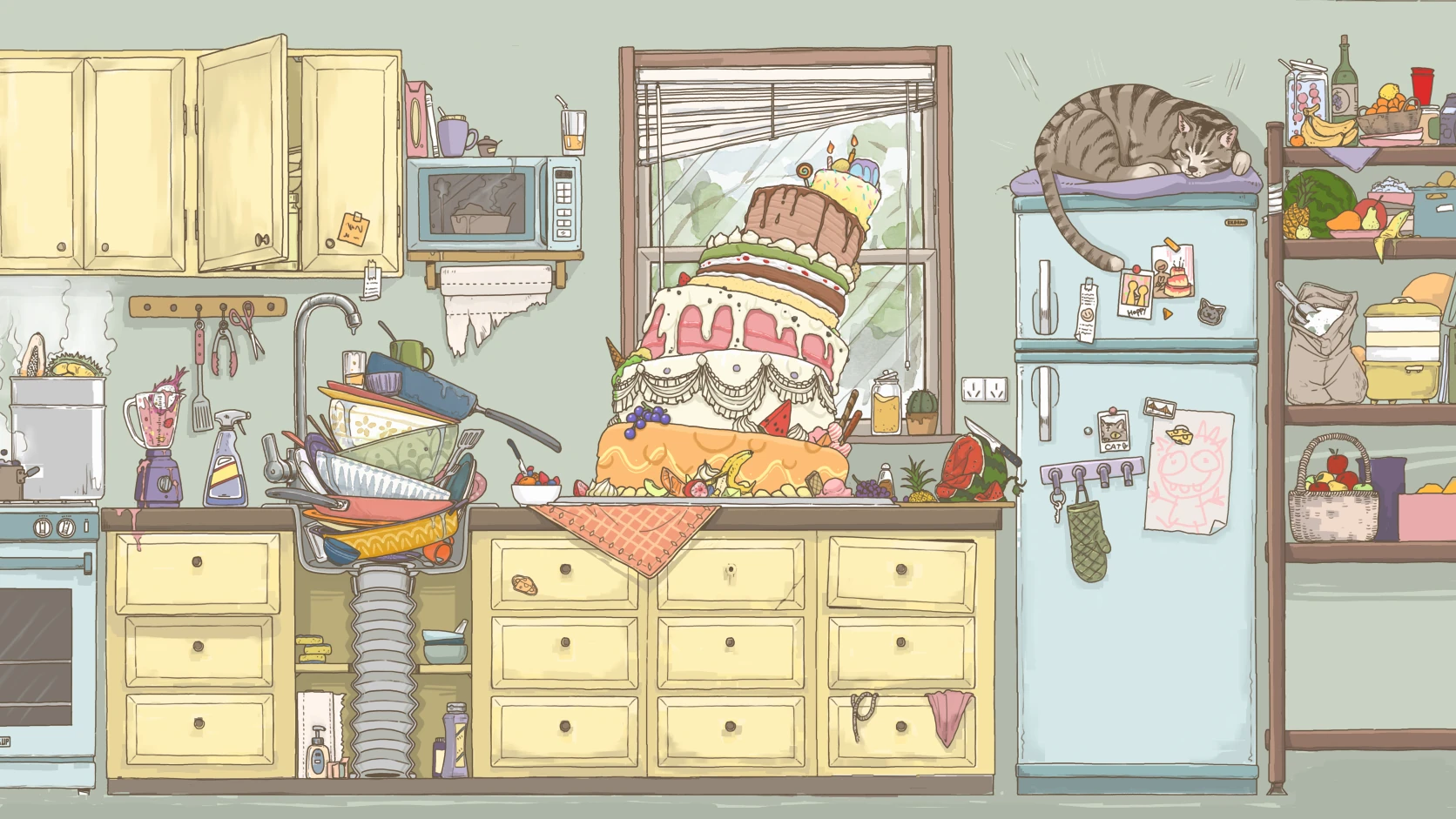
Twogether Climb is a cooperative 2D climbing game set in a miniature world of oversized kitchen objects. Each player controls the limbs on one side of a shared character, making progress a negotiation between two people rather than an individual task.
Within a four-person team, I contributed to Unity development and level design, shaping climbing routes around grip, obstacle spacing, and coordinated movement. My focus was to preserve the challenge of moving together while making the route understandable and the climb varied enough to feel like an adventure.
Playable two-player prototype captured in Unity.
The challenge
How can controlling one body together feel challenging and adventurous without becoming confusing or discouraging?
- 01
Balance challenge with learnability. Players need room to learn an unfamiliar control relationship, particularly when one or both have limited gaming experience.
- 02
Make climbing feel like an adventure. Different sections should introduce new situations to navigate together rather than repeat the same reach-and-grab sequence.
- 03
Make cooperation meaningful. Both players’ actions should affect shared progress, rather than function as separate tasks performed alongside each other.
Key design decisions
Make the route clear, not the solution
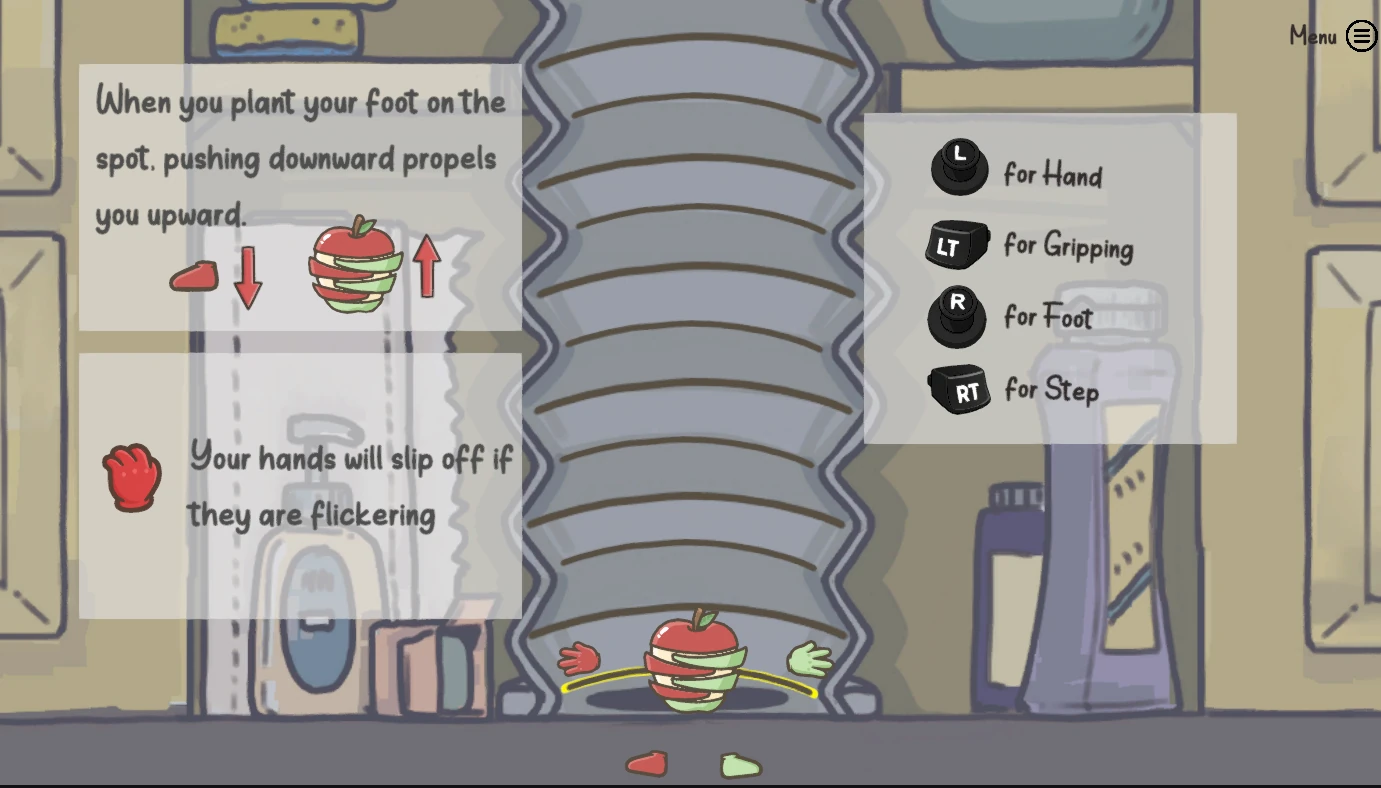
The level uses directional arrows to indicate where players should climb next. This gives both players a shared destination without prescribing every grip or movement.
My goal was to separate navigation uncertainty from the challenge of cooperation. Players should spend their effort deciding how to move the shared body together—not trying to identify the intended route. The arrows provide direction while leaving positioning, timing, and coordinated movement for the pair to work out.
Vary the situation, not just the difficulty
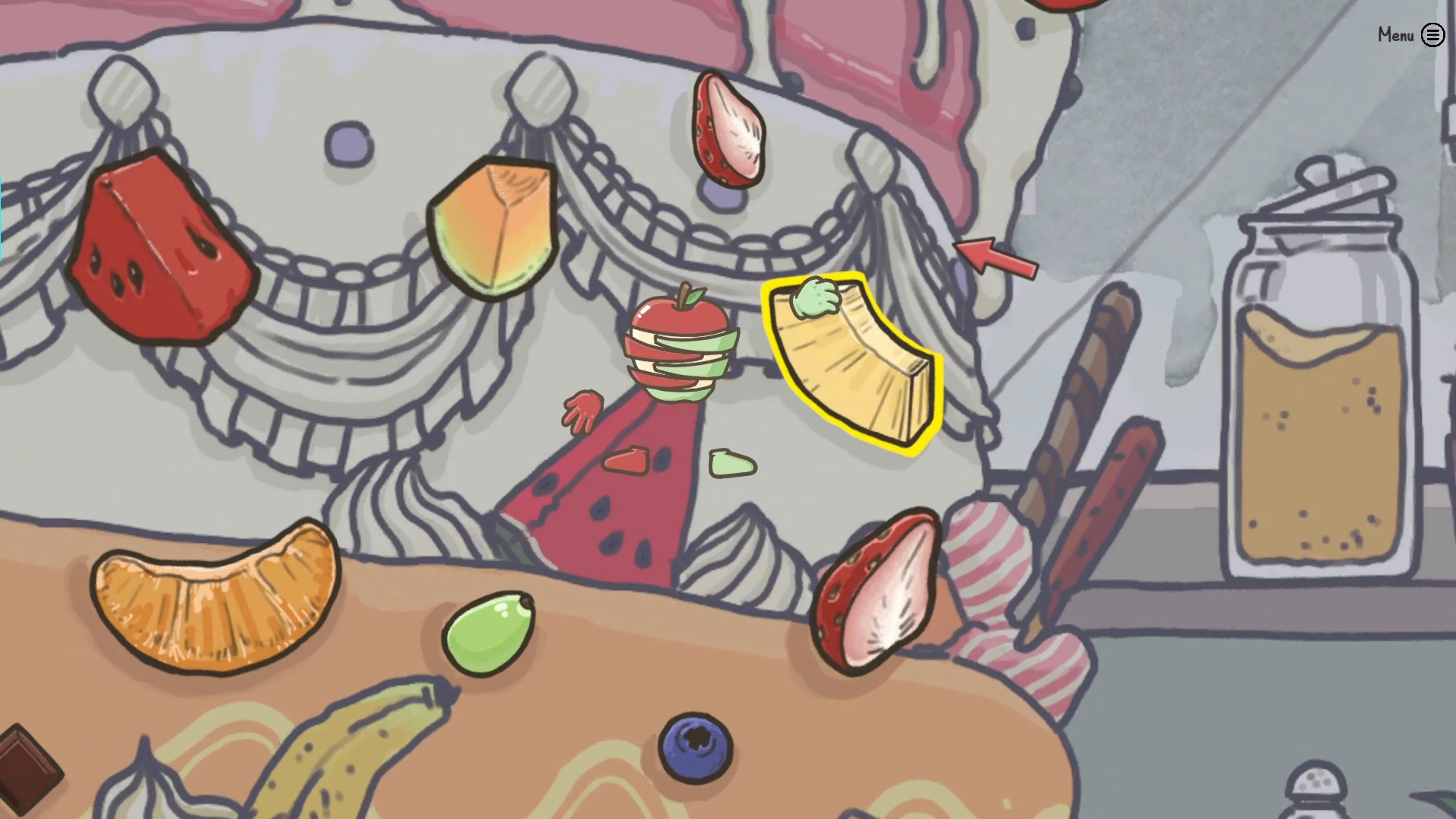
The demo combines different hold behaviors with falling-object encounters to give the climb more variety. Slippery holds cause the character to slide downward while gripping, while objects falling from above can knock players off their route.
These encounters change the demands of familiar climbing actions: holding on does not always mean staying in place, and a planned movement can be interrupted. The aim was to turn repeated climbing into changing situations that players navigate together.
This was a decision about variety, not a shortcut to making the game easier. Additional hazards still need to be balanced against the demands of shared control.
Use physics as communication
Both players affect the same physics-driven body. When one side reaches, pulls, or loses its grip, the resulting movement also changes the other player’s situation.
The shared body acts as a visible feedback channel alongside verbal communication. Each player can see the consequences of their partner’s actions through the character’s movement and changing position.
The design goal was to make cooperation continuous: players respond to one another throughout the climb rather than perform independent tasks and meet only at occasional cooperative obstacles.
Playtest observations
- The next route was not always clear.
Some players were unsure where to go next, revealing a navigation problem alongside the challenge of controlling the character. - Shared control was a clear point of interest.
Players described the concept and interaction as enjoyable and novel, highlighting the appeal of controlling one character together. - Difficulty was a barrier for less-experienced players.
Players reported that the game was demanding, particularly those who did not regularly play games.
These observations summarize informal player feedback recalled from playtests. They are not verbatim quotations or findings from a structured usability study.
Design response
The feedback supported keeping the shared-body interaction while making the surrounding experience easier to understand. Route confusion highlighted the importance of explicit direction, reflected in the arrows included in the demo. Different holds and falling objects support the separate design goal of making the climb more varied and adventurous.
Difficulty feedback points to further work on the learning curve, particularly for players with limited gaming experience. My next priority would be to review the opening routes, reach distances, and obstacle spacing, giving players room to practice shared movement before facing more demanding combinations.
Follow-up playtests would examine whether players can identify the next route without prompting, progress through the opening climbs, and remain actively involved on both sides of the character.
Outcome
Twogether Climb developed into an exhibition-ready, playable Unity demo. It was shortlisted for the Inaugural Photon Game Competition and presented at NYU’s Integrated Design and Media 2026 winter showcase, where it received positive informal audience feedback.
The main design takeaway was to distinguish meaningful cooperative challenge from avoidable friction. Learning to move together is the experience; unclear direction and an overly steep learning curve can prevent players from reaching it.
Playable two-player Unity prototype